
Morocco: A Journey Through History, Color, and Culture
“The only man I envy is the man who has not yet been to Africa, for he has so much to look forward to.” Rich Mullins
4/7/202516 min read

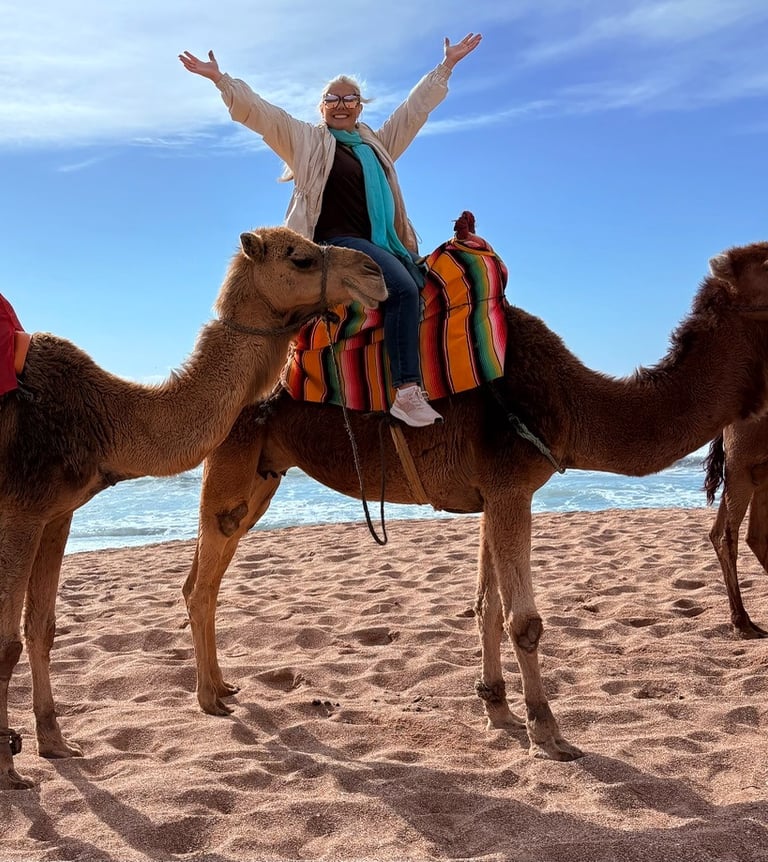
Morocco is a land where history feels alive in the streets, where ancient medinas still pulse with daily life, and where the line between the modern world and centuries of tradition blurs at every turn. Tourism here continues to grow as travelers discover its landscapes, flavors, and deep cultural heritage. The country’s story stretches back through Berber kingdoms, Arab dynasties, imperial cities, and trans Saharan trade routes. That sense of age and continuity is felt everywhere. We spent three weeks traveling through this mystical country and even that felt too short. Our route unfolded like chapters in a long novel, beginning in Marrakesh and continuing through Fes, Chefchaouen, Tangier, Rabat, and Casablanca. Each stop revealed a new version of Morocco and each day added to our appreciation for this remarkable place.
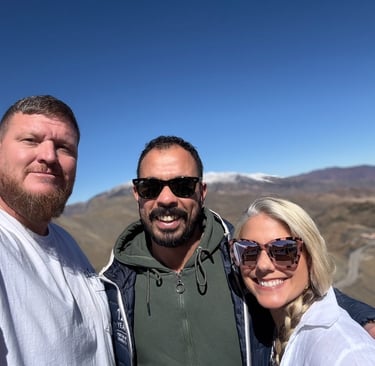
Our journey began in Marrakesh where we stayed at Le Meridien. The best decision we made was hiring a reliable driver because nothing shapes a Morocco trip more than transportation and safety. We were fortunate to find Badre (+212 673 284198) who became one of the highlights of our time in the country. He met us at the airport on our first night and guided us through Marrakesh and beyond with professionalism, warmth, and a deep love for his homeland.
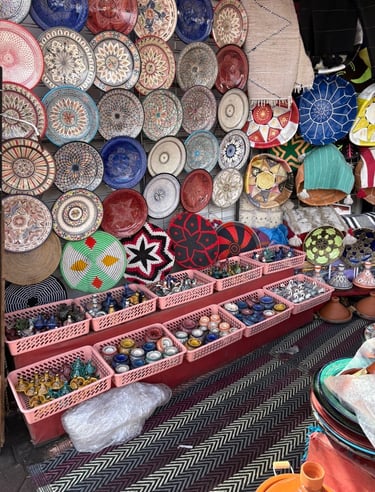
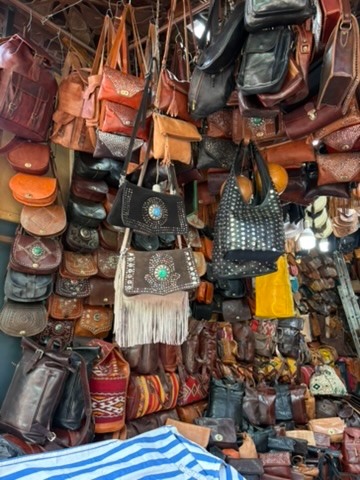
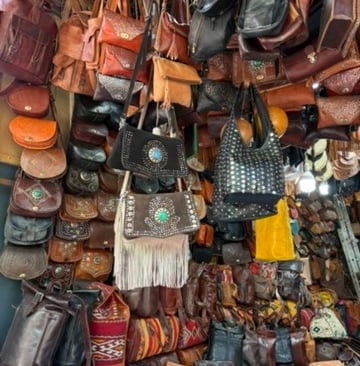
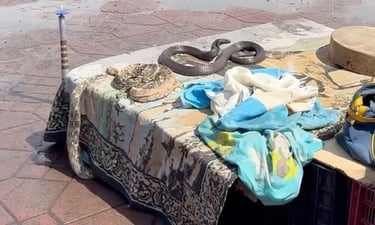
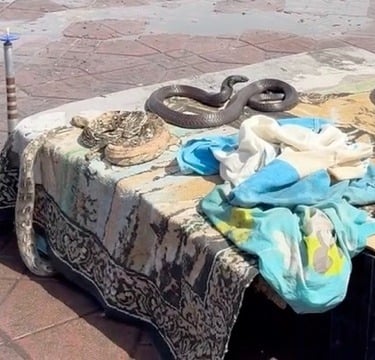
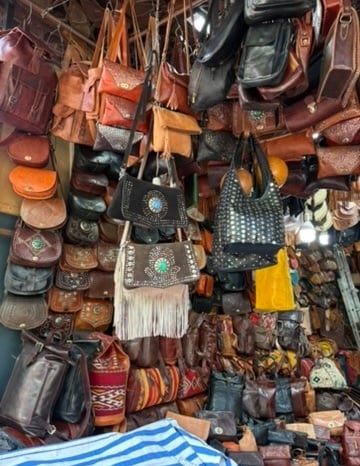
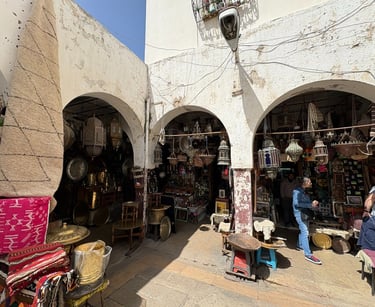
We started exploring Marrakesh with a walking tour of the historic center. Our guide led us through the maze of narrow streets surrounding Jemaa el Fnaa, one of the most famous squares in the world. We wandered past snake charmers, henna artists, market stalls, and tiny side alleys that opened into artisan workshops. We visited the Koutoubia Mosque from the outside since only Muslims can enter, but even from the courtyard its 12th century minaret was impressive. We walked through the souks where leatherworkers, wood carvers, metalworkers, carpet makers, and spice merchants worked side by side as they have for centuries. We saw the Bahia Palace with its intricate tilework and inner courtyards and learned how the city’s wealth and influence grew during the Almoravid and Saadian dynasties. The tour gave us a deeper understanding of the city and made it feel less overwhelming when we returned on our own to shop, eat, and watch the famous cobras.
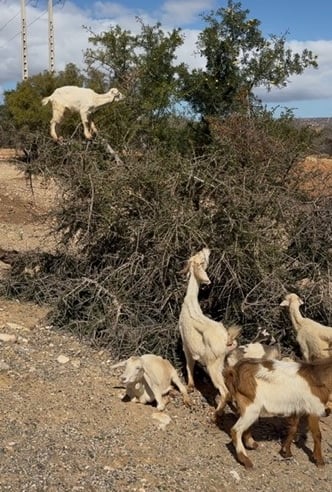
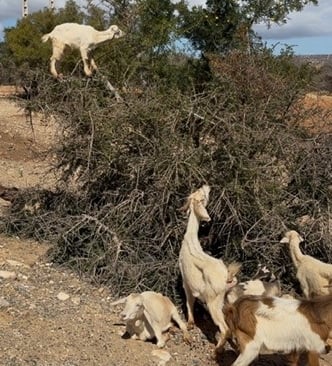
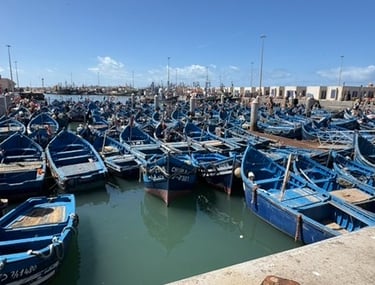
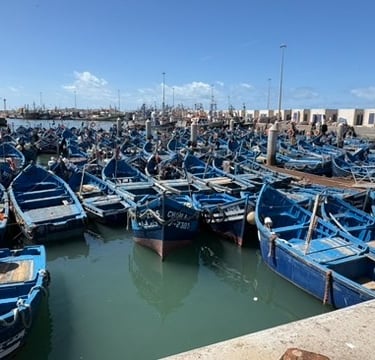
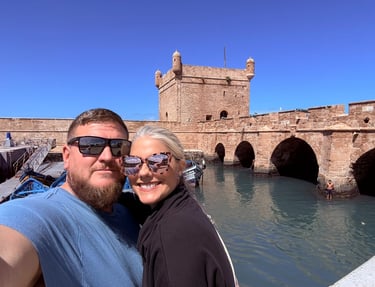
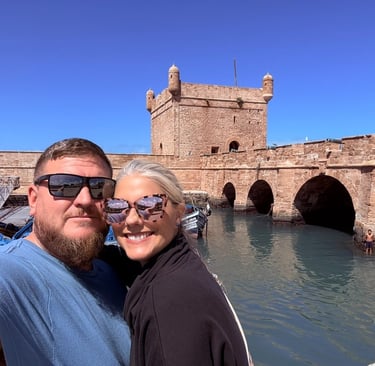
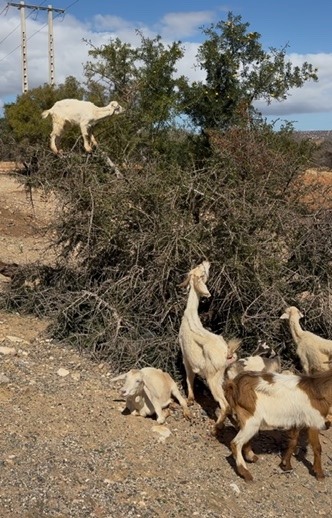
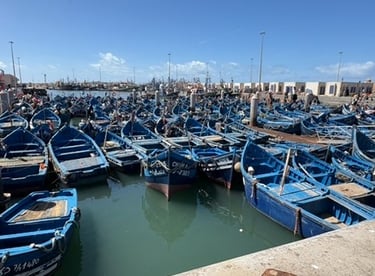
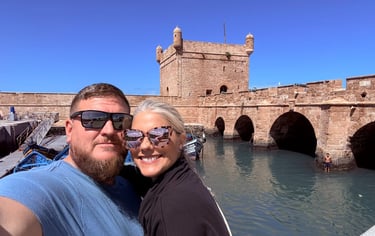
Our first major day trip with Badre was to the coastal town of Essaouira. The drive takes you past argan producing regions where goats famously climb the low argan trees to eat the fruit. Argan oil is one of Morocco’s most important exports and the process of harvesting and producing it has been part of Berber traditions for centuries. Essaouira itself is a beautiful fortified port city built during the eighteenth century under Sultan Mohammed ben Abdallah. Its medina is a UNESCO World Heritage Site with whitewashed buildings, blue doors, and a relaxed ocean breeze that feels like a pause from the intensity of Marrakesh. Several Hollywood productions have filmed scenes here including Game of Thrones which used its ramparts and sea walls to depict the city of Astapor. We loved the calm atmosphere, the fishing boats returning to port, and the slower rhythm of coastal life. It remains one of our favorite Moroccan towns.
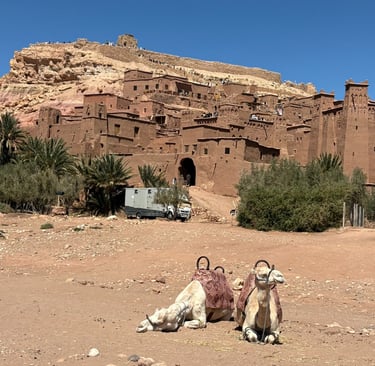
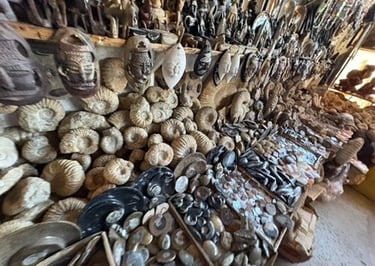
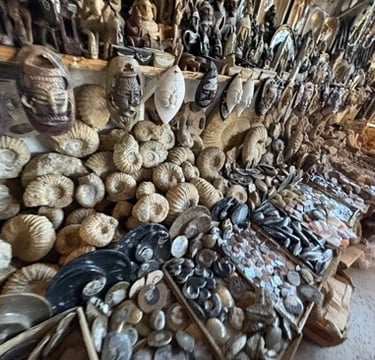
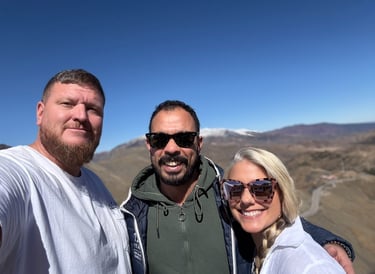
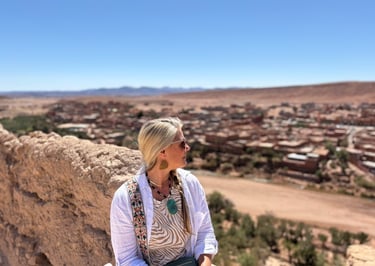
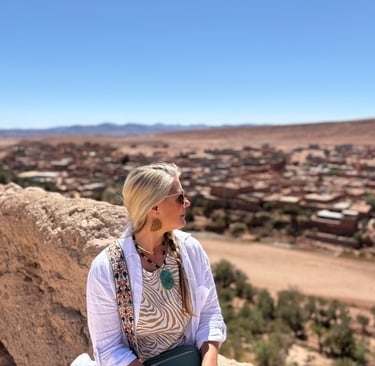
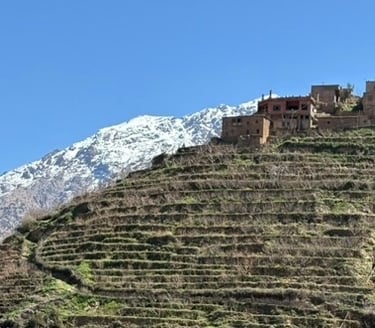
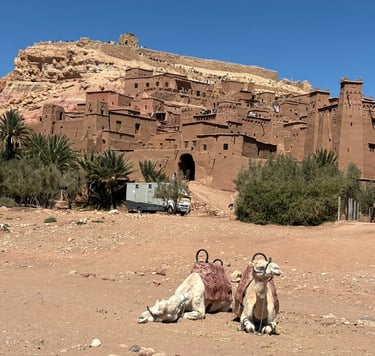
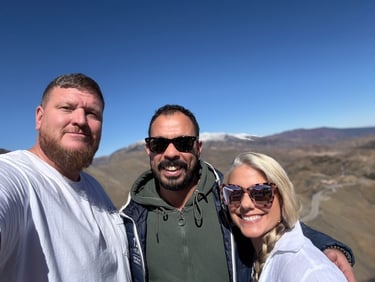
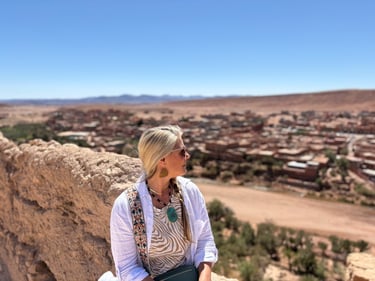
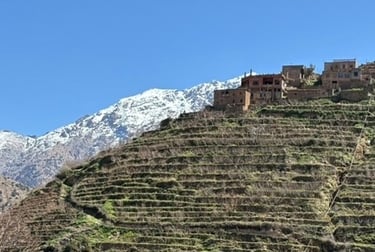
Another full day trip took us across the High Atlas Mountains to Ait Benhaddou. The drive from the Marrakesh Marriott area to Ait Benhaddou takes around four hours each way depending on traffic and road conditions, but the scenery is worth every minute. Small villages cling to the mountainsides and Berber communities still live traditional lives in this region. Along the way are rock shops selling ancient fossils, trilobites, ammonites, geodes, and mineral specimens at very reasonable prices. Ait Benhaddou itself is an ancient ksar, a fortified village made of earthen clay that has stood here for more than a thousand years. It was once a major stop for caravans traveling between the Sahara and Marrakesh. The site has been used in numerous films and shows including Gladiator, Lawrence of Arabia, The Mummy, Kingdom of Heaven, and Game of Thrones. Standing among the towers and walls you feel transported to another time. Souvenirs in this region are cheaper than in most of Morocco, but make sure you still haggle with them. We took advantage of their prices before heading back over the mountains.
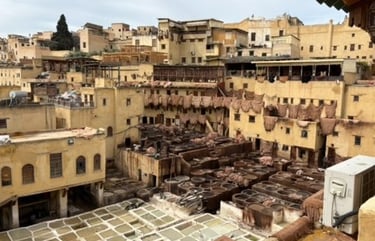
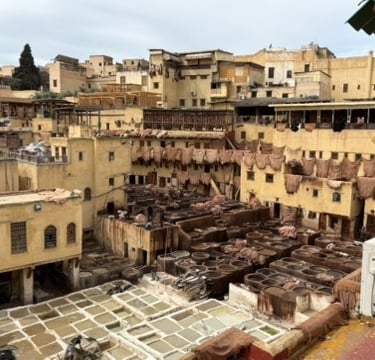
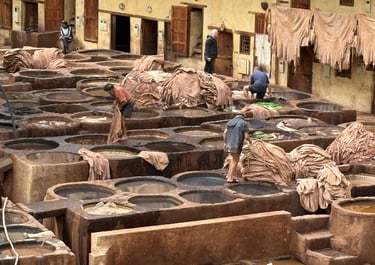
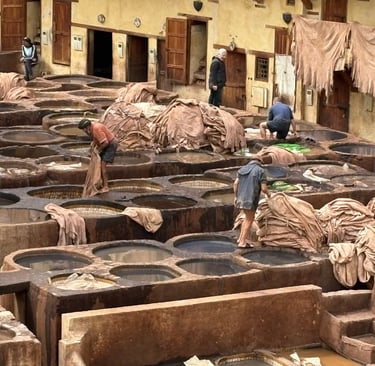
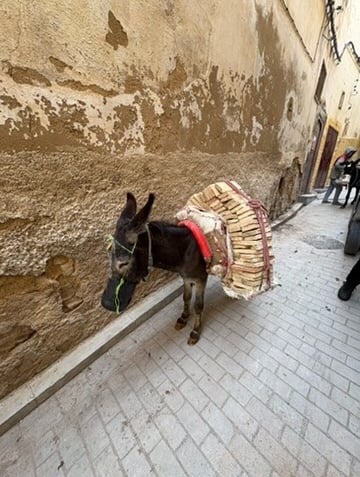
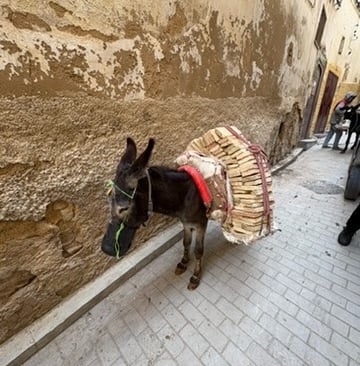
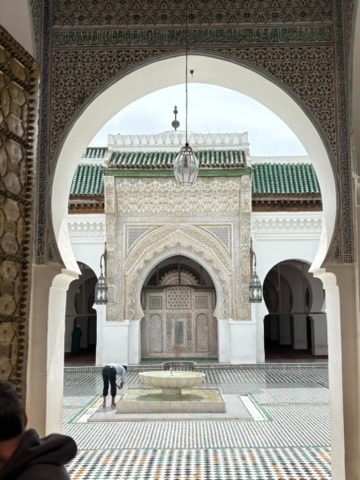
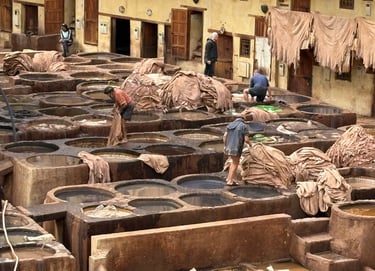
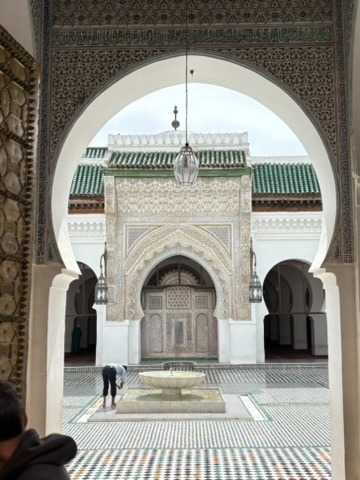
When our time in Marrakesh ended, Badre drove us to Fes which takes roughly six hours depending on stops and traffic. We stayed at the Marriott which was outside the busiest part of the old city but close enough to reach it quickly by taxi. On our first full day we took a four hour walking tour of the medina of Fes, one of the oldest continuously inhabited cities in the world. The medina is a living museum with more than nine thousand winding alleyways and countless artisan workshops. We visited the famous Chouara Tannery where leather is still processed using methods that date back a thousand years. The smell can be intense but the view of the vats filled with vibrant natural dyes is unforgettable. Fes is also an important center of Islamic learning. The University of Al Qarawiyyin founded in 859 is considered by UNESCO to be the oldest existing educational institution in the world. The tour helped us understand why Fes is considered the cultural and spiritual heart of Morocco.
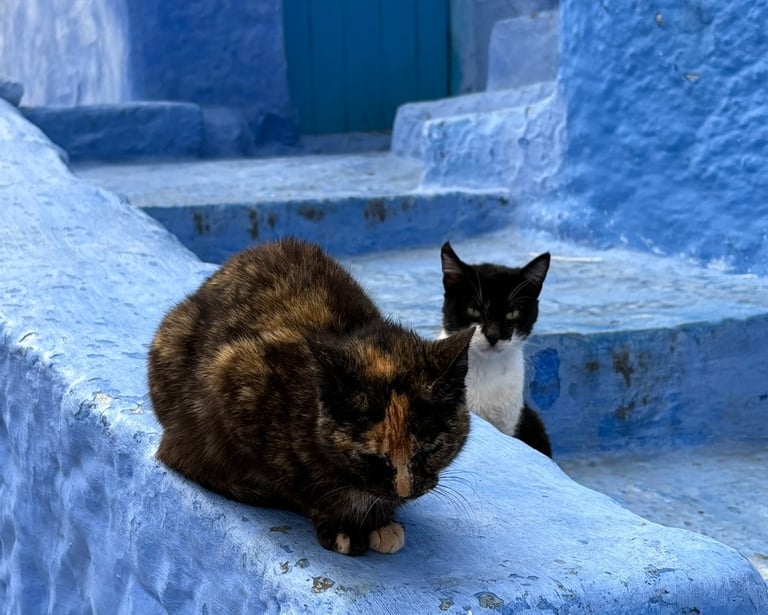
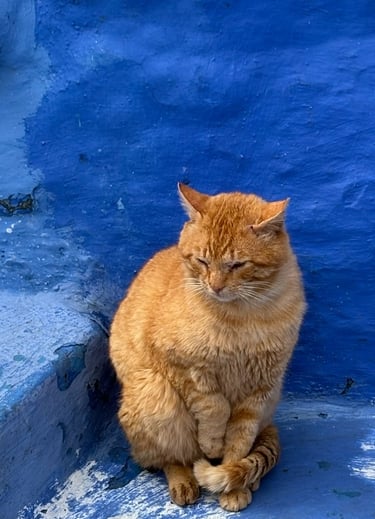
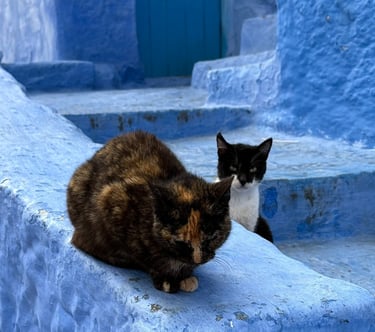
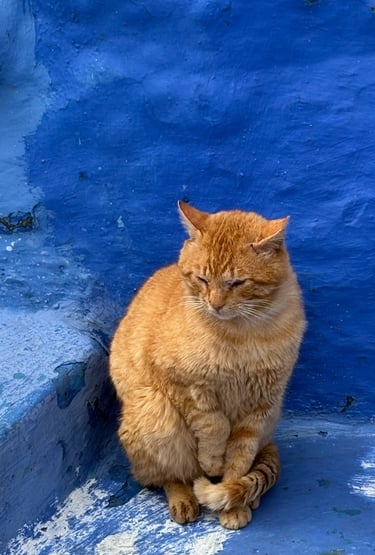
From Fes we traveled to Chefchaouen where we spent two nights. Known as the Blue City, Chefchaouen sits in the Rif Mountains and is famous for its blue painted houses, narrow passages, and peaceful atmosphere. The origins of the blue color vary depending on who you ask. Some say it symbolizes the sky and heaven, others say it was introduced by Jewish refugees in the fifteenth century to represent divinity, and others believe it helps keep mosquitoes away. Whatever the reason, the effect is magical. We stayed in a local riad which is a traditional Moroccan house built around a central courtyard, often with a rooftop terrace. Our riad, Dar Echchaouen, was beautiful and exceeded our expectations, although we stayed on the fourth floor without an elevator. With all our luggage it tested our motivation but the views overlooking the blue city made it worthwhile. Chefchaouen is more relaxed than the larger cities and we spent our days wandering the alleys, admiring the murals, shopping for affordable local crafts, and of course admiring the many cats that seemed to pose for photos around every corner. Two days felt like the perfect amount of time.
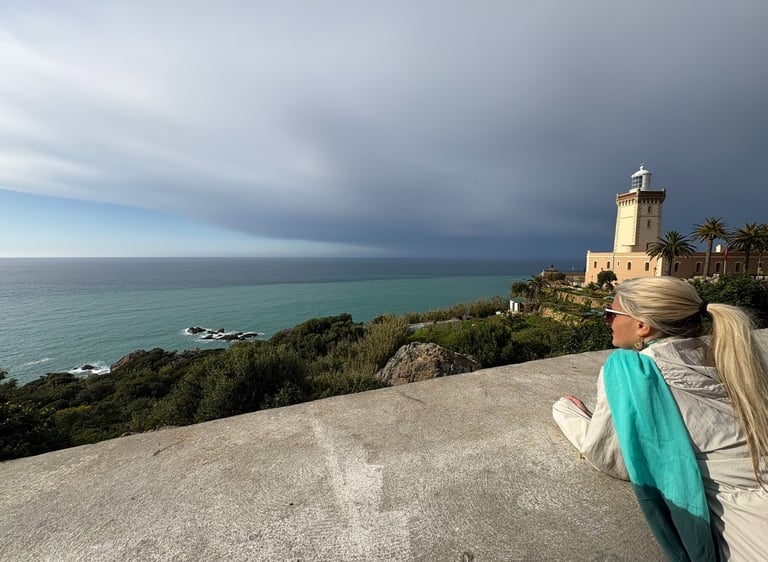
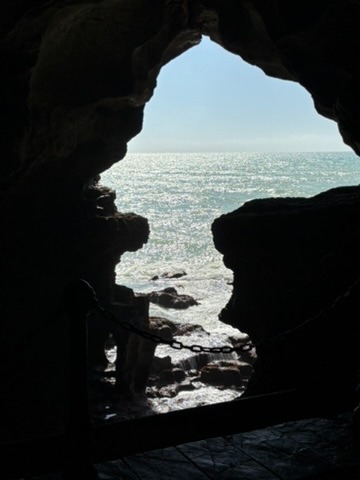
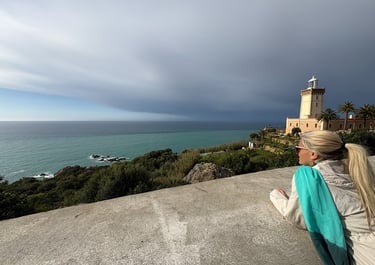
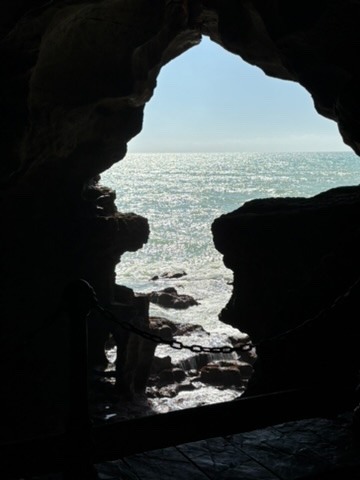
Next we spent two nights in Tangier at the Hilton. Tangier was much cleaner and safer than we anticipated and it has a fascinating history as an international city governed by foreign powers throughout the twentieth century. We enjoyed the downtown walking areas and visited the famed Caves of Hercules which are tied to ancient mythology and open onto the Atlantic in a dramatic silhouette resembling the shape of Africa. We also visited Cap Spartel where the Mediterranean Sea meets the Atlantic Ocean. The views are expansive and standing there you can physically see the blending of two worlds.
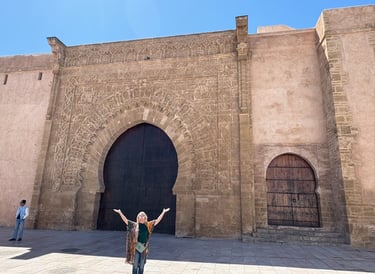
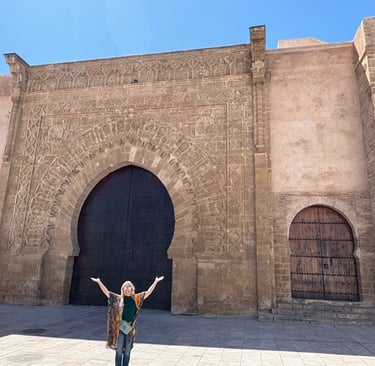
After our time in Tangier, we continued our journey south to Rabat where we spent several nights exploring Morocco’s capital. Rabat felt calmer and more orderly than many of the other cities we visited. It has an elegance rooted in its history as both an imperial city and the official political center of the country. While in Rabat we visited the Kasbah of the Udayas, a twelfth century fortress overlooking the Atlantic with beautiful blue and white walls that reminded us of a quieter version of Chefchaouen. We wandered through its Andalusian gardens, a peaceful space filled with citrus trees, flowers, and shaded pathways. We also visited the Hassan Tower and the Mausoleum of Mohammed V, an impressive complex guarded by ceremonial soldiers that honors Morocco’s royal family. The city’s layout, wide boulevards, and modern touches made Rabat feel welcoming and approachable. It was a pleasant surprise and gave us a different lens through which to view Morocco.
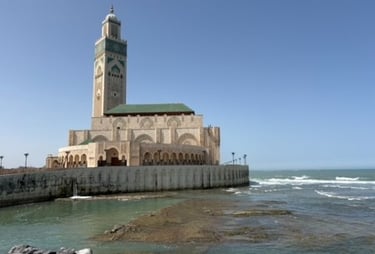
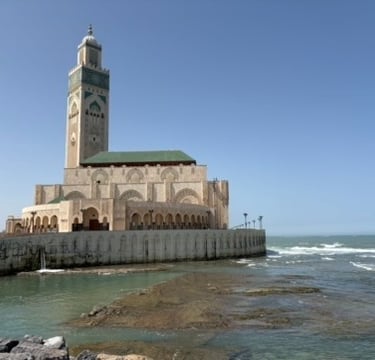
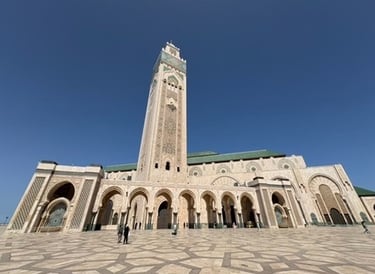
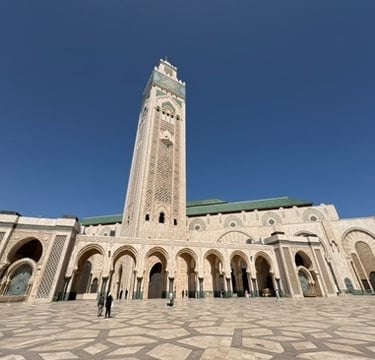
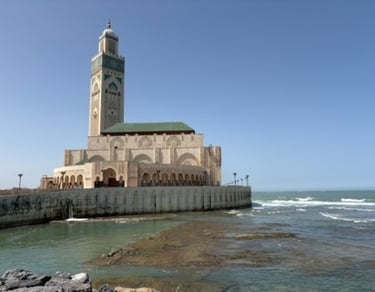
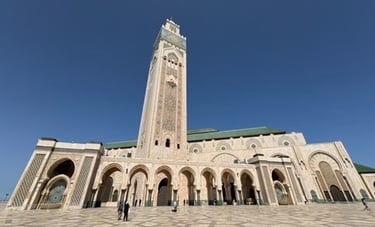
From Rabat we continued to Casablanca and for our final five nights we stayed at the Marriott. We had high expectations but found Casablanca more industrial and less charming than the other cities. Even so there were memorable experiences worth sharing. The Hassan II Mosque is the city’s highlight and one of the most beautiful religious structures in the world. It is one of the few mosques in Morocco open to non Muslims and tours are provided at set times throughout the day. The mosque sits partly over the Atlantic Ocean and features hand carved marble, intricate wood ceilings, and one of the tallest minarets in the world. Tickets can be purchased at the onsite ticket office and it is important to arrive early and dress respectfully. After touring the mosque, we walked along the corniche to enjoy the sea views and take photos of the mosque from the outside. It was quieter and more subdued but worth doing since we were already in the neighborhood.
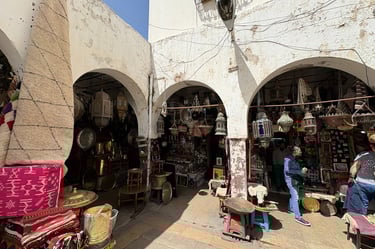
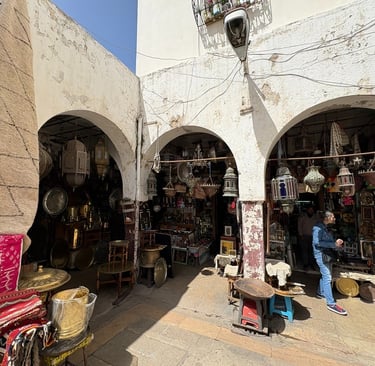
For souvenir shopping in Casablanca the best market we found was in the Habous Quarter which is about five kilometers from the mosque. It felt more authentic and better priced than the more commercial areas. Taxis are inexpensive but always try to use a red taxi with a meter or agree on a fare that seems reasonable. We finished our Casablanca visit with a meal at Rick’s Café which is themed after the classic film Casablanca. It is not traditional Moroccan cuisine but it was fun, atmospheric, and required a reservation.
Morocco was more than we expected and left us wanting to explore even more of its landscapes and traditions. From ancient medinas to mountain villages and coastal towns, the country offered a rich blend of culture, history, and hospitality. We loved our time there and would return without hesitation. If you are planning your own Moroccan adventure and want help tailoring a safe and memorable itinerary, reach out to Tacks Travels. We would be honored to share our experiences and guide you toward the magic we found in this unforgettable country.



Morocco is a land where history feels alive in the streets, where ancient medinas still pulse with daily life, and where the line between the modern world and centuries of tradition blurs at every turn. Tourism here continues to grow as travelers discover its landscapes, flavors, and deep cultural heritage. The country’s story stretches back through Berber kingdoms, Arab dynasties, imperial cities, and trans Saharan trade routes. That sense of age and continuity is felt everywhere. We spent three weeks traveling through this mystical country and even that felt too short. Our route unfolded like chapters in a long novel, beginning in Marrakesh and continuing through Fes, Chefchaouen, Tangier, Rabat, and Casablanca. Each stop revealed a new version of Morocco and each day added to our appreciation for this remarkable place.
Our journey began in Marrakesh where we stayed at Le Meridien. The best decision we made was hiring a reliable driver because nothing shapes a Morocco trip more than transportation and safety. We were fortunate to find Badre (+212 673 284198) who became one of the highlights of our time in the country. He met us at the airport on our first night and guided us through Marrakesh and beyond with professionalism, warmth, and a deep love for his homeland.
We started exploring Marrakesh with a walking tour of the historic center. Our guide led us through the maze of narrow streets surrounding Jemaa el Fnaa, one of the most famous squares in the world. We wandered past snake charmers, henna artists, market stalls, and tiny side alleys that opened into artisan workshops. We visited the Koutoubia Mosque from the outside since only Muslims can enter, but even from the courtyard its 12th century minaret was impressive. We walked through the souks where leatherworkers, wood carvers, metalworkers, carpet makers, and spice merchants worked side by side as they have for centuries. We saw the Bahia Palace with its intricate tilework and inner courtyards and learned how the city’s wealth and influence grew during the Almoravid and Saadian dynasties. The tour gave us a deeper understanding of the city and made it feel less overwhelming when we returned on our own to shop, eat, and watch the famous cobras.
Our first major day trip with Badre was to the coastal town of Essaouira. The drive takes you past argan producing regions where goats famously climb the low argan trees to eat the fruit. Argan oil is one of Morocco’s most important exports and the process of harvesting and producing it has been part of Berber traditions for centuries. Essaouira itself is a beautiful fortified port city built during the eighteenth century under Sultan Mohammed ben Abdallah. Its medina is a UNESCO World Heritage Site with whitewashed buildings, blue doors, and a relaxed ocean breeze that feels like a pause from the intensity of Marrakesh. Several Hollywood productions have filmed scenes here including Game of Thrones which used its ramparts and sea walls to depict the city of Astapor. We loved the calm atmosphere, the fishing boats returning to port, and the slower rhythm of coastal life. It remains one of our favorite Moroccan towns.
Another full day trip took us across the High Atlas Mountains to Ait Benhaddou. The drive from the Marrakesh Marriott area to Ait Benhaddou takes around four hours each way depending on traffic and road conditions, but the scenery is worth every minute. Small villages cling to the mountainsides and Berber communities still live traditional lives in this region. Along the way are rock shops selling ancient fossils, trilobites, ammonites, geodes, and mineral specimens at very reasonable prices. Ait Benhaddou itself is an ancient ksar, a fortified village made of earthen clay that has stood here for more than a thousand years. It was once a major stop for caravans traveling between the Sahara and Marrakesh. The site has been used in numerous films and shows including Gladiator, Lawrence of Arabia, The Mummy, Kingdom of Heaven, and Game of Thrones. Standing among the towers and walls you feel transported to another time. Souvenirs in this region are cheaper than in most of Morocco, but make sure you still haggle with them. We took advantage of their prices before heading back over the mountains.
When our time in Marrakesh ended, Badre drove us to Fes which takes roughly six hours depending on stops and traffic. We stayed at the Marriott which was outside the busiest part of the old city but close enough to reach it quickly by taxi. On our first full day we took a four hour walking tour of the medina of Fes, one of the oldest continuously inhabited cities in the world. The medina is a living museum with more than nine thousand winding alleyways and countless artisan workshops. We visited the famous Chouara Tannery where leather is still processed using methods that date back a thousand years. The smell can be intense but the view of the vats filled with vibrant natural dyes is unforgettable. Fes is also an important center of Islamic learning. The University of Al Qarawiyyin founded in 859 is considered by UNESCO to be the oldest existing educational institution in the world. The tour helped us understand why Fes is considered the cultural and spiritual heart of Morocco.
From Fes we traveled to Chefchaouen where we spent two nights. Known as the Blue City, Chefchaouen sits in the Rif Mountains and is famous for its blue painted houses, narrow passages, and peaceful atmosphere. The origins of the blue color vary depending on who you ask. Some say it symbolizes the sky and heaven, others say it was introduced by Jewish refugees in the fifteenth century to represent divinity, and others believe it helps keep mosquitoes away. Whatever the reason, the effect is magical. We stayed in a local riad which is a traditional Moroccan house built around a central courtyard, often with a rooftop terrace. Our riad, Dar Echchaouen, was beautiful and exceeded our expectations, although we stayed on the fourth floor without an elevator. With all our luggage it tested our motivation but the views overlooking the blue city made it worthwhile. Chefchaouen is more relaxed than the larger cities and we spent our days wandering the alleys, admiring the murals, shopping for affordable local crafts, and of course admiring the many cats that seemed to pose for photos around every corner. Two days felt like the perfect amount of time.
Next we spent two nights in Tangier at the Hilton. Tangier was much cleaner and safer than we anticipated and it has a fascinating history as an international city governed by foreign powers throughout the twentieth century. We enjoyed the downtown walking areas and visited the famed Caves of Hercules which are tied to ancient mythology and open onto the Atlantic in a dramatic silhouette resembling the shape of Africa. We also visited Cap Spartel where the Mediterranean Sea meets the Atlantic Ocean. The views are expansive and standing there you can physically see the blending of two worlds.
After our time in Tangier, we continued our journey south to Rabat where we spent several nights exploring Morocco’s capital. Rabat felt calmer and more orderly than many of the other cities we visited. It has an elegance rooted in its history as both an imperial city and the official political center of the country. While in Rabat we visited the Kasbah of the Udayas, a twelfth century fortress overlooking the Atlantic with beautiful blue and white walls that reminded us of a quieter version of Chefchaouen. We wandered through its Andalusian gardens, a peaceful space filled with citrus trees, flowers, and shaded pathways. We also visited the Hassan Tower and the Mausoleum of Mohammed V, an impressive complex guarded by ceremonial soldiers that honors Morocco’s royal family. The city’s layout, wide boulevards, and modern touches made Rabat feel welcoming and approachable. It was a pleasant surprise and gave us a different lens through which to view Morocco.
From Rabat we continued to Casablanca and for our final five nights we stayed at the Marriott. We had high expectations but found Casablanca more industrial and less charming than the other cities. Even so there were memorable experiences worth sharing. The Hassan II Mosque is the city’s highlight and one of the most beautiful religious structures in the world. It is one of the few mosques in Morocco open to non Muslims and tours are provided at set times throughout the day. The mosque sits partly over the Atlantic Ocean and features hand carved marble, intricate wood ceilings, and one of the tallest minarets in the world. Tickets can be purchased at the onsite ticket office and it is important to arrive early and dress respectfully. After touring the mosque, we walked along the corniche to enjoy the sea views and take photos of the mosque from the outside. It was quieter and more subdued but worth doing since we were already in the neighborhood.
For souvenir shopping in Casablanca the best market we found was in the Habous Quarter which is about five kilometers from the mosque. It felt more authentic and better priced than the more commercial areas. Taxis are inexpensive but always try to use a red taxi with a meter or agree on a fare that seems reasonable. We finished our Casablanca visit with a meal at Rick’s Café which is themed after the classic film Casablanca. It is not traditional Moroccan cuisine but it was fun, atmospheric, and required a reservation.
Morocco was more than we expected and left us wanting to explore even more of its landscapes and traditions. From ancient medinas to mountain villages and coastal towns, the country offered a rich blend of culture, history, and hospitality. We loved our time there and would return without hesitation. If you are planning your own Moroccan adventure and want help tailoring a safe and memorable itinerary, reach out to Tacks Travels. We would be honored to share our experiences and guide you toward the magic we found in this unforgettable country.
info@allinglobaltravel.com